How do you invest in crypto as a complete beginner?
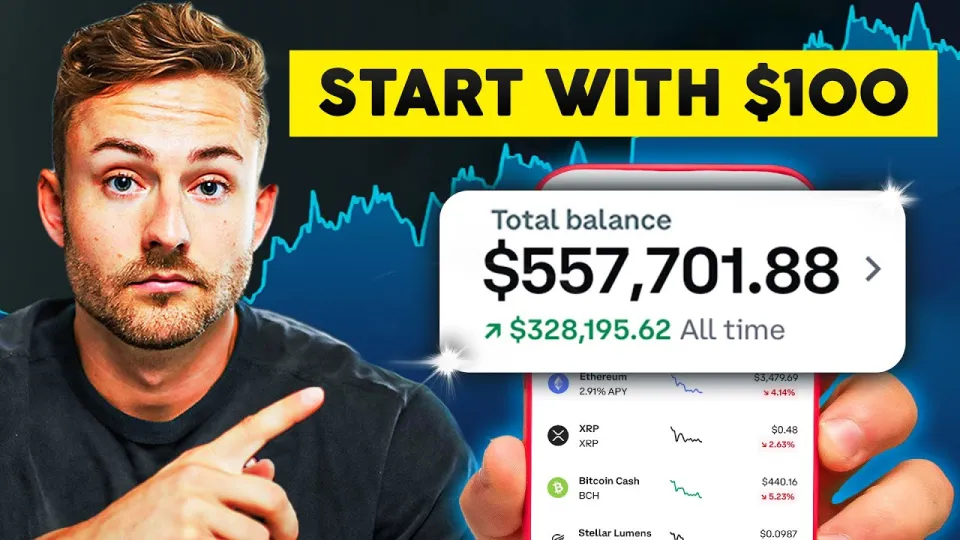
Video: How To Invest in Crypto as A COMPLETE Beginner [2025 GUIDE]
Want articles like this for your own video to promote it on YouTube and Google? Order them through the Telegram bot @sat_sit_bot. The bot writes and publishes the articles itself (with your YouTube video embedded) on popular topical websites (no ads). Free trial — 50 articles.
Investing in crypto as a complete beginner means learning four things before you risk any money: what the asset actually is, why it might be worth something, how to read a price chart, and how to protect your capital when you are wrong. Craig Percoco, who has spent seven years trading and investing, built his beginner guide around exactly that sequence, and you can start with his free trading training at the free trading course. The goal he sets is not to gamble but to join the small percentage of investors who treat crypto as an emerging market worth studying properly.
What crypto basics should a beginner learn first?
A beginner should understand that crypto is a market of digital assets recorded on blockchains, and that Bitcoin and Ethereum are the two reference points everything else is measured against. Blockchain is the shared ledger that records ownership; a token is a unit issued on top of one. Before buying anything, you should be able to explain in one sentence what problem the asset solves and who pays to use it.
Percoco's structure starts with basics and then moves to the size of the opportunity, because context matters: crypto trades around the clock, seven days a week, with no closing bell and no circuit breakers, which means prices can move violently while you sleep. That single fact explains why beginners often lose money in their first month and why preparation, not prediction, is the entry ticket.
Why does crypto still hold huge potential for new investors?
The case for crypto is that it is a young, global, internet-native market that institutions only began entering in earnest in recent years. When large asset managers, public companies and regulated exchanges start offering exposure to an asset class, the pool of potential buyers grows. That is the "emerging market" argument Percoco makes: you are early to something that is being progressively absorbed into mainstream finance.
The counterweight is volatility. A market that can double in months can also fall 70% and stay down for a year. Treat the potential as a reason to learn and size positions carefully, not as a promise. Anyone selling certainty in crypto is selling something else.
What are crypto fundamentals and how do you evaluate a coin?
Fundamentals are the facts about a project that exist independently of its price chart, and for a beginner they come down to a short checklist:
- Tokenomics — total supply, circulating supply, inflation schedule and how new coins are released. A large unlocked supply waiting to hit the market is a structural headwind.
- Use case and users — does the network have real activity, fees paid, or developers building on it, or is the value purely narrative?
- Team and funding — who built it, who invested, and whether tokens are concentrated in a few wallets.
- Liquidity — can you exit your position without moving the price? Thin order books punish beginners.
- Comparables — how does market capitalization compare with rivals solving the same problem?
Percoco places fundamentals before technicals deliberately: charts tell you when, fundamentals tell you what. Buying a weak asset at a perfect entry is still buying a weak asset.
How do technicals help a beginner time entries and exits?
Technicals are the study of price and volume to decide when to act, and the beginner's version is intentionally simple. Learn support and resistance, trend direction on higher timeframes, and volume confirmation. TradingView is the standard charting tool for this work and is linked in the resources below.
What technicals will not do is rescue a trade with no plan. The most common failure pattern among new traders is entering on a signal with no predefined invalidation point, then holding a loser while hoping. A chart is a decision tool, not a fortune teller.
How do traders actually make money in crypto?
There are three broad routes, and they demand different temperaments. Holding long term means buying assets you have researched and accepting drawdowns. Swing trading means capturing multi-day or multi-week moves using technical levels. Active day trading means many small decisions under pressure and is the hardest to do consistently.
Whichever route you choose, the money is made by the process rather than the pick: position sizing, a stop loss decided before entry, and a realistic expectation for how much you risk per trade. Most beginners invert this and risk too much on their first idea, which turns one bad call into a portfolio-level event.
How do you buy and sell crypto safely as a beginner?
Buying crypto happens on a regulated exchange, and the practical steps are the same everywhere:
- Choose an exchange with strong liquidity and clear fees; Coinbase is the common starting point for beginners, Bybit is popular for more active trading.
- Complete identity verification, which is mandatory on regulated platforms.
- Fund the account with fiat currency rather than a credit card, and only with money you can afford to lose.
- Place a spot buy order, then move larger balances to your own wallet so you control the keys.
- Decide your exit in advance — a target price, a stop, or a rebalancing rule.
Selling deserves the same planning as buying. Write down the conditions under which you would exit before you enter, because in the middle of a fast move you will not think clearly.
How do you stay organized and avoid the classic beginner mistakes?
Staying organized is the least glamorous and most decisive skill. A trading journal that records the date, the asset, the reason for entry, the risk taken and the outcome turns experience into feedback instead of noise. Backtesting a simple rule set before risking money does the same thing faster.
The mistakes that repeat across beginners are consistent: no system, no patience, no discipline, no backtesting, no journal, poor psychology and poor risk management. Notice that none of them are about picking the wrong coin. Fixing the process is what separates the small group that survives its first year from the majority that does not.
All links and resources from the guide
- Free trading training: https://bit.ly/3VHSOeT
- Crypto trading course and private team: https://bit.ly/3xhn47c
- Discord community access: https://bit.ly/3VmrO3r
- Full resource list: https://bit.ly/3zeM13u
- TradingView charting: https://bit.ly/3Xf9uvz
- Bybit exchange: https://partner.bybit.com/b/fortraders
Final thoughts on starting in crypto
Crypto rewards preparation and punishes improvisation, so build the fundamentals, the chart skills, the risk rules and the journal before you scale up. Craig Percoco's beginner breakdown is a useful map because it treats investing as a craft with an order of operations rather than a lottery ticket. Start small, document everything, and let the process compound. When you are ready to go deeper, begin with the free training at the free trading course.
Key takeaways
- Craig Percoco frames his beginner guide around seven years of trading and investing experience and the goal of joining the top 1% of investors.
- The guide is split into basics, potential, fundamentals, technicals, making money, buying and selling, and staying organized.
- Tokenomics and blockchain are named as core crypto fundamentals beginners should study before buying anything.
- Buying and selling happens on exchanges such as Coinbase or Bybit, while charting is typically done on TradingView.
- Risk management and journaling are the habits most often cited by traders who lose money early.
Source: How To Invest in Crypto as A COMPLETE Beginner [2025 GUIDE] · Markdown version
Questions & answers
How much money do I need to start investing in crypto?
There is no minimum in a technical sense, but you should start with an amount small enough that a 50% drawdown would not affect your life. Many beginners start with a few hundred dollars to learn the mechanics of exchanges, fees and wallet transfers before committing more capital.
Do I need a mentor or paid course to trade crypto?
You do not need one to buy and hold Bitcoin, but structured education shortens the learning curve on risk management and chart reading. If you pay for anything, choose material that teaches a repeatable process rather than signals, and treat any promise of guaranteed returns as a red flag.
Why do most beginners lose money in their first year?
The recurring causes are oversized positions, no stop loss, no journal and no backtested system. Losses usually come from process failures rather than from picking the wrong coin, which is why risk rules matter more than any single trade idea.
Is it better to hold crypto long term or trade actively?
Holding suits people who have researched their assets and can tolerate volatility without reacting to every headline. Active trading can produce faster results but requires screen time, discipline and strict risk limits, and most beginners underestimate how demanding it is.